The History and Meaning of the Peacock Pattern in Polish Pottery
Among all Polish pottery patterns, the Peacock pattern is one of the most recognizable and beloved. With its bold cobalt blue arcs and signature dotted details, this hand-painted design has become a symbol of traditional craftsmanship from Boleslawiec, Poland.
But beyond its striking appearance, the Peacock pattern carries history, symbolism, and cultural pride that make it even more special.

A Pattern Rooted in Boleslawiec Tradition
The Peacock pattern originated in the pottery-making region of Boleslawiec, where artisans have been crafting stoneware for generations. Known for its durability and hand-stamped decoration, Polish pottery from this region is celebrated worldwide.
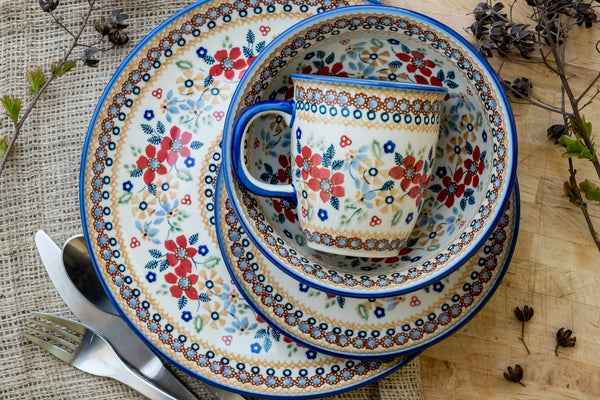
The design features repeating fan-like shapes that resemble the open feathers of a peacock’s tail. These arcs are carefully created using traditional sponge-stamping techniques — a method that has been passed down through generations of artisans.
Today, many workshops in Boleslawiec continue to produce their own variations of the Peacock motif, each painted by hand, ensuring that no two pieces are ever exactly alike.

What Do the Dots Represent?
One of the most meaningful elements of the Peacock pattern is its dotted detailing.
These signature dots are often said to represent:
- Stars scattered across the night sky
- Drops of rain falling onto the earth
Both interpretations reflect themes of nature, abundance, and renewal — motifs that frequently appear in traditional Polish folk art.
The dots also serve a visual purpose. They add rhythm and movement to the design, drawing the eye across the surface of the piece and giving it a lively, almost celebratory feel.
A Design Celebrated in Boleslawiec
The Peacock pattern is more than just a popular export — it is a point of pride within Boleslawiec itself. Displays throughout the town celebrate the craftsmanship and heritage behind these iconic designs, especially during pottery festivals and exhibitions.
Visitors to Boleslawiec often see elaborate arrangements of Peacock-patterned plates, bowls, and serving pieces that highlight how versatile and enduring the design truly is.

Why the Peacock Pattern Remains So Popular
Timeless Blue and White Palette
The classic cobalt and white color combination fits effortlessly into both traditional and modern kitchens.
Easy to Mix and Match
Peacock coordinates beautifully with other Polish pottery designs. The shared color families make layering patterns simple and visually cohesive.
Heritage Appeal
Because it is one of the most traditional and recognizable motifs, the Peacock pattern feels rooted in authentic Polish pottery history.
The Craftsmanship Behind Every Piece
Authentic Polish pottery is made from durable stoneware clay and fired at high temperatures for strength. Each piece is:
- Hand-painted
- Sponge-stamped by skilled artisans
- Microwave safe
- Dishwasher safe
- Oven safe
- Freezer safe
The Peacock pattern requires careful repetition and precision, especially when applying the dotted details evenly across curved surfaces like bowls and mugs. This level of craftsmanship ensures that every plate, serving dish, or baker becomes both functional and collectible.
Bring the Peacock Pattern to Your Table
The Peacock pattern is more than a decorative motif — it’s a celebration of tradition, artistry, and everyday beauty. Whether you’re starting your first collection or adding to a growing one, this iconic design offers both visual impact and lasting durability.
Explore the collection:
About Blue Rose Pottery
At Blue Rose Pottery, we specialize in authentic hand-painted Polish pottery imported directly from Boleslawiec, Poland. Every piece is crafted using traditional techniques and designed to be both beautiful and functional for everyday life.